
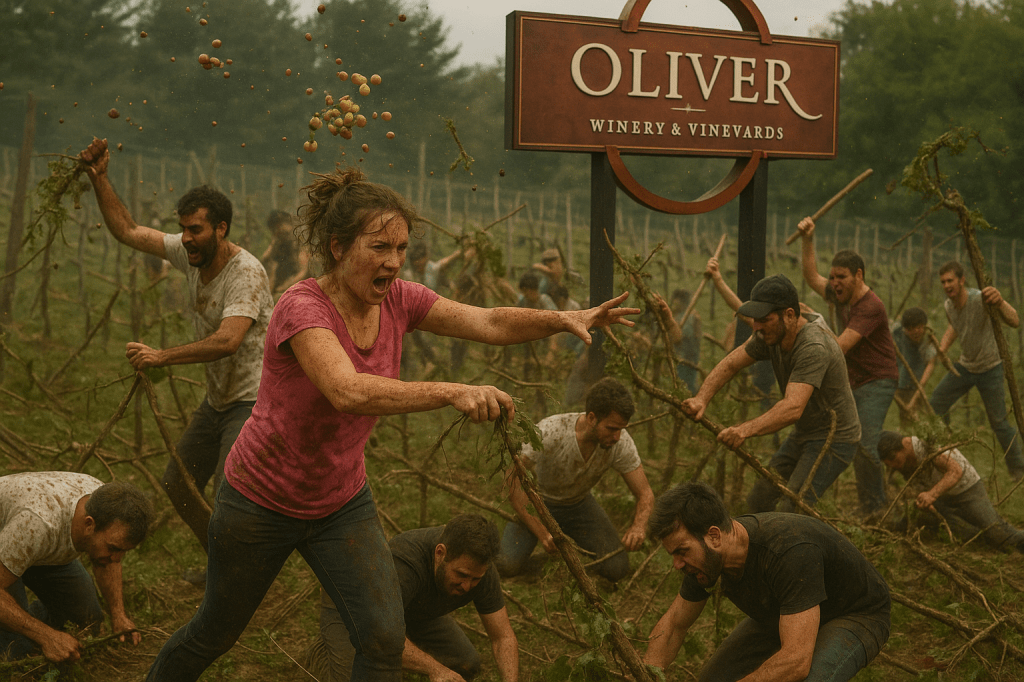
BLOOMINGTON, IN — What began as whispers in the tasting rooms and barrel houses of southern Indiana’s wine country has erupted into a full-scale viticultural insurgency as a coalition of rival wineries, long simmering under the shadow of Oliver Winery’s regional dominance, executed a coordinated dawn raid on the vineyard’s sprawling estate.
The Merlot-fueled marauders uprooted rows of prized vines, pelted staff with clusters of semi-ripened Concord, and symbolically toppled the iconic Oliver sign that has taunted and loomed over Bloomington’s rolling hills for decades.
Founded in 1972, Oliver Winery has long been synonymous with Indiana wine, a towering oak barrel in a region of mason jars. Its sweet reds and fruit-forward whites dominate supermarket shelves from Evansville to Elkhart, its label a near-ubiquitous feature of graduation parties and Mother’s Day brunches.
But success, critics say, bred arrogance.
“The Oliver machine became the Napa of the Midwest,” said one disgruntled wine warrior. “And we’re just supposed to let them dictate what pairs with every damn charcuterie board? No, not anymore.”
According to sources close to the uprising, the assault, dubbed Sweet Red Dead Redemption, was months in the planning. A loose alliance of boutique wineries, micro-vineyards, and even one kombucha startup reportedly met in secret wine caves and repurposed barn lofts to strategize the coup.
The plan was simple: overwhelm Oliver’s defenses by sheer numbers. By 6:00 a.m., the vineyard was swarmed with hundreds of vintners armed with pruning shears, trellising poles, and bushels of discarded grapes. Witnesses describe scenes of “organized chaos,” as insurgents uprooted decades-old vines and rebranded them with artisanal labels reading, “Now Locally Owned.”
One participant, wiping fermented pulp from his brow, described the raid as “intensely liberating.”
“For too long, their muscadine monoculture has strangled innovation,” proclaimed a masked vine-torching villain. “Today, we compost that tyranny.”
Oliver Winery leadership, reached for comment through a hastily scribbled note attached to a broken corkscrew, vowed to rebuild. “We will replant. We will re-ferment. And we will rise — fuller-bodied and tastefully-aged.”
As the dust settles over the once-pristine rows of vines, industry observers warn the Midwest wine industry may never be the same. Some predict a renaissance of small-batch, locally-focused producers. Others foresee a power vacuum, with no single vineyard strong enough to dictate regional flavor profiles.
But for now, the victors sip from goblets filled with gleefully crushed protest juice and gaze out over their conquered fields.
“This is more than an adversely possessed vineyard,” said one rebel winemaker, clutching a grape-stained banner in the morning light. “This is the beginning of a new vintage.”



 Limestone Ledger
Leave a comment